I’ve tried the whole “read the Bible through in a year” thing about four or five times in my life.
Continue reading
Category Archives: Parenting
After Tragedy: Reflecting on Newtown and Henan
“I have heard all this before.
What miserable comforters you are!
Won’t you ever stop blowing hot air?
What makes you keep on talking?
I could say the same things if you were in my place.
I could spout off criticism and shake my head at you.
But if it were me, I would encourage you.
I would try to take away your grief.” (Job 16:2-5 | NLT)
I don’t have much to say that others have not said. What I would like to do is to direct you to some articles and blogs that I hope will help you, as they helped me, make sense of the tragedies at Sandy Hook and Chengpeng and remember what I should direct my mind and heart toward after it has passed.
“When I was a boy and I would see scary things in the news, my mother would say to me, “Look for the helpers. You will always find people who are helping.” To this day, especially in times of “disaster,” I remember my mother’s words and I am always comforted by realizing that there are still so many helpers – so many caring people in this world.” – Fred Rogers
Continue reading
Electing Faithfulness Part 6: Civil Rights for the Unborn Class
[back to part 5: Foreign Policy]
“Civil Rights for the Unborn Class”
or
“Understanding what Abortion means to a Nation and a Community”
or
“Being Pro-Seamless-Garment-of-Life”
Take a moment to, no matter your opinion, erase as much as you can concerning the preconceptions of people who exist on the “abortion stance spectrum”, including the terms we use.
Now I want to tell you that I believe that a sound civil government respects a woman’s right to her body. I also believe that every person has a right to life, even those who are not yet recognized citizens. I know that slightly more than half of children conceived in the world are women, and they have a right to live. Because women and men are equal, I must conclude that all male children conceived in the world have a right to live. Therefore, I believe all children have a right to live. The government should not interfere with a woman’s body (or a man’s), but if a woman has another woman inside her, and she is trying to end that life, then the government is at a crossroads, having to make a decision between not interfering with one woman’s body, but also protecting the life of another.
Continue reading
Book Trailer for _Wonder_ by R.J. Palacio
Recently I read the new juvenile fiction novel Wonder by R.J. Palacio, about a boy born with a facial disfigurement who is about to enter public school for the first time.
I was on a team with two others, Paige Horst and Katie Estes, cohorts of a graduate class in teaching young adult literature. Our goal was to create a book trailer for Wonder. We focused on the motif of space and the universe in the novel.
I recommend Wonder for adults and children. It’s a great message about kindness.
Lessons from a Tampa Tantrum
One of the lessons I’m going to teach my son one day is this: I have an apple and Mikey and Tommy both have an apple too, but they each want another apple. Joey has never had an apple and wants to try one, so I decide to give him mine. But Mikey and Tommy are big bullies, and Joey gets picked on, so if I give him an apple they’re just gonna take it away from him most likely. Tommy’s always been the bigger bully (at least that’s what Mikey always says), and so I might as well give my apple to Mikey instead of Joey because if I give it to Joey and Mikey and Tommy try to get it, Tommy might get it instead of Mikey.
What I’m going to teach my son is that it’s very important for me to give Joey my apple no matter what Mikey and Tommy say or do, even if I know they’ll take it away. Because there are four people who need to see it happen. What I will not teach my son is that giving an apple to Joey is the same as giving it to Tommy because he’s a big old bully.
Pat Robertson is a false prophet: Not that this is anything new
We don’t really pay attention to Pat Robertson. Me and the people I know. Goobers that we are, we’re wise enough to know he is incapable of being trusted about anything remotely spiritual. In fact, one could create a guide on how to be a good Christian by merely saying, “don’t act like this man at all.”
But Pat Robertson isn’t Fred Phelps of Westboro Baptist. WBB is rather benign, since there is a small number of them and nobody takes them seriously. No, Robertson is much worse. He commands a media empire, and countless people look up to him. Professed Christians are looking up to a servant of Shaitan.
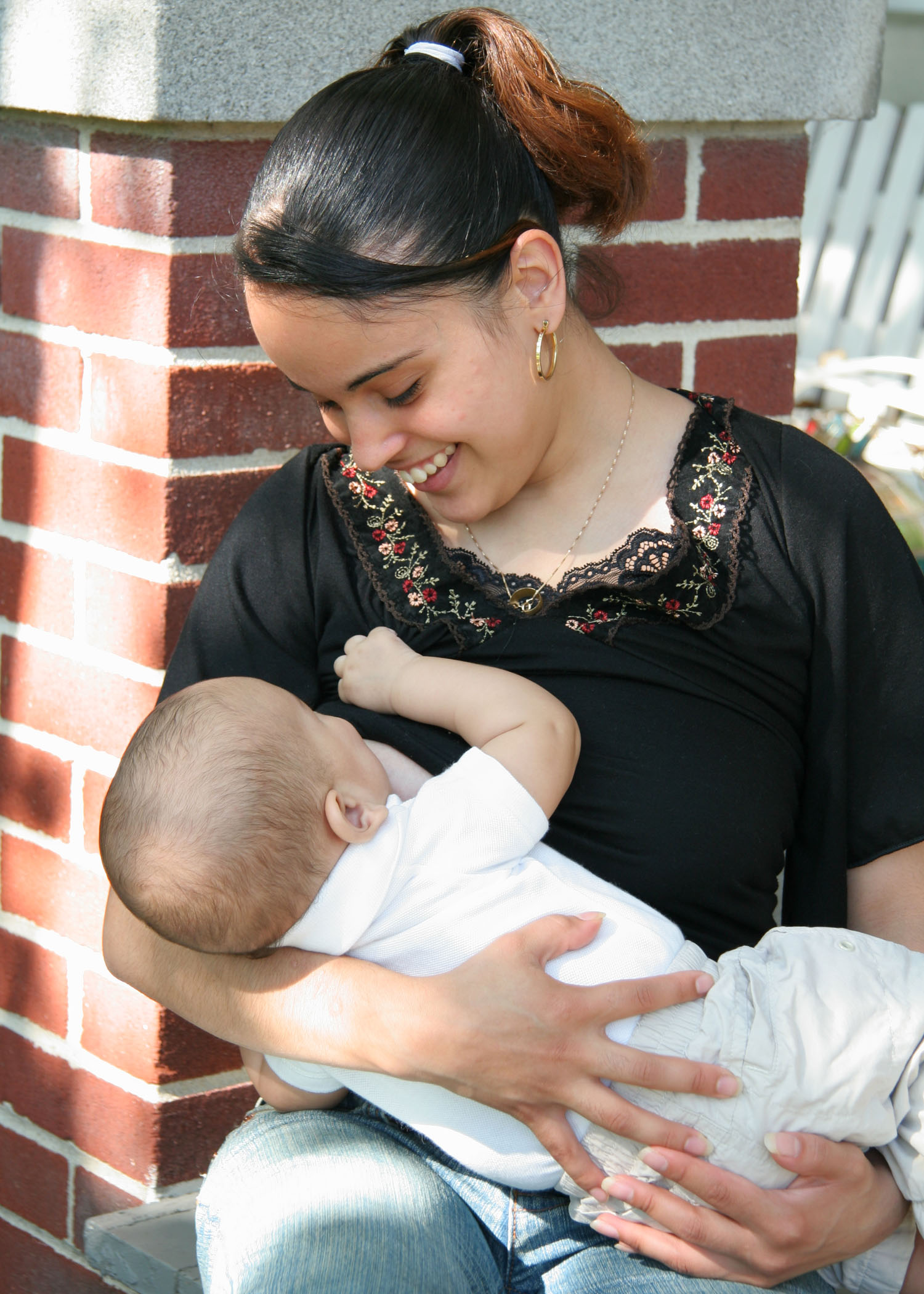
Stay Abreast of Lactivism
Women breastfeed their babies. They’ve done it longer than restaurants have been in existence, longer than public parks have been in existence, longer than Western society has been in existence.
Breasts. Breasts. Breasts. Maybe if I say it enough times you won’t blush. Breasts.
For longer than your family’s last name has been around women gathered around and breastfed their babies. In America, granted, breasts are very sexual. Thus, most women who breastfeed their babies in public do so discreetly. It’s a grace they give.
Ca-Ca-Ca-Courageous Dads
Remember that lion from Wizard of Oz? He was a big ol’ lion but he was a pansy. Then the wizard gives him a medal of bravery because he did, after all, face a witch and flying monkeys and the wrath of a fake wizard for Dorothy, even though he was scared. That time-worn, but true lesson that courage isn’t the absence of fear, but earning a fearless life by overcoming fear.
The first movie I watched after Noah was born was Courageous, the most recent film made by Alex Kendrick and Sherwood Pictures, the church group who made Facing the Giants and Fireproof (and Flywheel, which, if you see it, is really cheezy and low budget, but surprisingly compelling).
In Courageous, a group of police officers come to the realization that they aren’t living fulfilling lives as fathers. When they become dispirited from the growing rate of crime, they decide that the world needs fathers to step up and be more involved in their childrens’ lives. They make a pact together to be better fathers themselves.

Christian entertainment these days is full of cheese. It reeks of Andy Griffith and flannel board renditions of the parables. This isn’t necessarily a bad thing. Mostly it’s just a matter of taste. We don’t like to hear messages that are simple, or preachy, or brought to us by “an authority”. We like complex messages, stories that entertain us more than call us to action, and messages from characters that discover what they want, not come to a realization about what is right or wrong. Does this movie have cheese? It has some. But it’s not preachy, or oversimplified, or depicting Christianity as an authoritative religion.
The dilemma I find myself in is finding movies that are wholesome and artistically interesting and raw with meaning. We like our Andy Griffith, but it’s a story about a town that never really existed in real life (or at least exited for whites). It taught us really good lessons, but didn’t touch a lot of issues. But yet I’ve seen some movies simply because they were critically acclaimed and thought, “man, Clockwork Orange has a lot to say about society and the human psyche but did I really need to see all that?” I should have just read the book.
I say all this to say that I really enjoy and appreciate Courageous because it’s a wholesome story that doesn’t cut artistic corners or lie about how the world works. It is very much like the more popular film The Blind Side, only with much more overt Christian themes. Sure, some of the delivery is bad, but how shallow are we if we reject a message because the actors (who by definition are pretending anyway) aren’t as good at pretending as their more talented counterparts? Maybe that’s why good Christians aren’t good actors, because they don’t like to play pretend. Maybe non-fiction is more our thing, releasing documentaries about the good work being done for Christ. It’s easy to create wholesome entertainment for children, because they love to play pretend. For adults, maybe it’s hard to find wholesome movies because when we see people acting as Christians on the screen we see ourselves only pretending to be Christians.
Sherwood’s films do have their share of issues. [spoiler alert]. It sometimes seems that they’re trying to tell us that if we pray to God and try to do what’s right, bad things will stop happening to us. In Giants, the coach says “we win, we pray to God; we lose, we pray to God.” Well, they pray to God, and you can imagine what happens. I don’t think the filmmakers are trying to present the prosperity gospel, the great heresy of Joel Olsteen. After all, the scriptures say, “seek first the kingdom of God, and all these things will be added to you.” But the question is, does he give us everything we want? Or need? We need very little; fasting shows God we know this. I think the films try to show us that if we pursue faithfulness, things will come together in a meaningful way in our lives, whether for the good or in spite of it. In Courageous bad things happen, and even after the pact of faith is made bad things continue to happen.
Another critique of the film may be the very idea of these men taking an oath to be exemplary fathers, and having to have an ordained minister there to do this. I can see why people may be offended by this idea. Shouldn’t all fathers take up this mantle? Do you need a clergyman to verify your vow to be a good father? Since this idea is novel to the film, it’s not like they were trying to enforce some denominational rite.
What I do like about the film is something that could have gone wrong but didn’t: how they deal with crime and the world. Rather than a propaganda piece telling us that a rise in crime necessitates a rise in law enforcement measures at any cost, the writers propose that being better examples and leaders is the best solution. Of course, they still do their duty as cops to arrest criminals. But they also don’t show this simplistic view of crime and criminals. They prefer to tackle and handcuff than shoot. Judge Dredd is an anti-Christian figure.
They also avoid getting the racist label. Several of the criminals depicted are black, but, in the deep south this is a statistical truth that says more about race relations and poverty than “the black race”. One of the cops is black, too. One of the main characters is hispanic. He and his wife have deep accents, border on poverty, and are unemployed. This could have easily been a racist caricature, but it isn’t. They are portrayed as intelligent, hard workers with strong faith. Their accents are incidental, as is their poverty, and the man’s willingness to take any honest job makes himself honorable. In fact, he inspires faith in the white fathers. Some sensitive viewers might scoff at a comic scene involving the cops making use of his “hispanic-ness”, but that would be a stretch of a critique, and even then, even the heroes of a story aren’t perfect, nor should they be.
Bible belt Christians seem to be depicted as racist and, let’s face it, many are, and the white/black divide in churches shows there is still work to do. But I caught no signs in the film that the filmmakers were going to irresponsibly let their own viewers validate prejudice. They wanted to make sure their viewers didn’t walk away saying, “we would just have less crime if we just got rid of all this scum (meaning, certain ‘kinds’ of people).” The problem of crime isn’t the presence of a certain race or culture, but a certain value of honor and integrity, or lack thereof.
But I’m glad to see the rise in popularity of these films, even among non-Christian audiences. Hollywood just isn’t making wholesome movies any more, and even people who aren’t pursuing God are interested in wholesome stuff, not just for their kids, but maybe because deep down the know they need something uplifting and morally compelling beyond vague celebrations of “the triumph of the human spirit”.
I don’t think a film has to have an overt moral message to be considered “Christian”. But one thing I look forward to as a father is watching all this G and PG rated stuff that just doesn’t seem much fun without a kid in the house. I say that now—I’m sure I’ll sing a different tune after 26 viewings of Disney’s Cars.
Teach your child to speak right
The following is a clip from the documentary “American Tongues”
(beware of the use of a derogatory term, supported neither by myself nor, I imagine, the documentarians)
What’s your language prejudice?
When I was younger I had a lot. A little bit against ebonics, but most against redneck talk. I had friends who looked down on rurality and quaintness and so I did the same.
My dad swears up and down I used to correct his grammar a lot. I don’t remember doing that. What I did do was critique his pronunciation. That’s phonetics, not grammar. It did kill me when I was twelve and he would sit down at a Roanoke restaurant and say “weaww wa wah-er”. The waitress would ask him to repeat, and he would switch to a slow, punctuated version of the same pronunciation: “We. aww. wawn. waher.” At least, that’s how it sounded to me.
Now I’m much more tolerant of dialectical variation, thought I do recommend pronouncing your words according to your context, Dad.
But one thing I will teach my son is there is no “right English.” The closest thing to a standard is only standardized because it is used by those in power. It does not make you smarter. And even the most notorious “errors”, such as “he be goin’ to the store,” operate based on certain rules. Double negatives (“don’t have none”) were used by Chaucer, as were consonental metatheses (“Can I axe you a question”). Is a person dumber or more likely to join a gang because they say “axe”, or are they actually intelligent enough to adapt to the practicality of our English-trained tongues placing the velar stop prior to the post-alveolar sibilant fricative?
So as a teacher I teach my students the same thing I’ll teach my son. Learn to code switch. Some people want you to wear a coat and a tie to certain functions. Oblige them if you want to please them and get what you want from them. If it insults your sense of self identity, don’t do it. As a teacher I have to teach students how to writer “proper,” but it’s no more proper than their own tongue.
One of the miraculous gifts given to the apostles was the ability to speak in tongues. They spoke and everyone understood. They didn’t demand everyone learn Greek. or Hebrew. In fact, the language of the Bible is not the ritzy, “proper” Greek, but street Greek, barnyard Greek, the language of simple merchants and traders. Then there’s the good book story of the “shibboleth”, where one Palestinian tribe slaughtered the other, using their inability to pronounce a syllable as an excuse.
How do you view people based on how they talk? Do you judge them by their pronunciations, the grammatical rules to which they adhere, their colloquialisms? Or do you consider instead the content of their words, whether they be hateful or considerate, wise or foolish, critically incisive or muddling?
What’s your language prejudice, and what does it say about you? I submit that it tells me more about you than your own dialect does. Ain’t no buts about it.
 CALEB COY