Electing Faithfulness: Part 4: All About the Benjamin$

[back to part 3: The Constitution]

“It’s All About the Benjamins”
or
“The Lower Class Needs Care and Dignity and Sustainability”
or
“Why A Budget is A Very Moral Issue” (and why you are very wrong if you disagree)

I am convinced that Ron Paul will actively slash the US deficit and do more than any other candidate to help bring the US out of debt.  I don’t know much about the logistics of economics, but I know enough about the philosophy of it.  I will discuss the philosophy and rhetoric of money and government.

Contrary to many opinions, economic issues are and always will be moral issues.  People who call themselves “values voters” or voters who “only focus on moral issues” and then neglect economic issues are ignorant and destructive.  You shouldn’t be surprised how many problems actually come down to money.  You know it happens in marriages, you know it happens in churches, you know it happens in schools.  This is one of our government’s greatest problem right now.  Do you say that abortion is a big issue?  Did you know that women in poverty are more likely to seek abortion when pregnant?  Did you know that after a baby is born it’s still human, and still needs to eat and be taken care of?  Money is directly related to these things.  And if we don’t care about poor families, then we are not “pro family” at all.
Continue reading

_Not Worth Fighting For_ Review: Part 13

Chapter 12 was on the alleged violent Jesus in the temple.

Chapter 13 is about the alleged violent Jesus in John’s Revelation.  J. Nelson Kraybill asks “What About the Warrior Jesus in Revelation 19: ‘He has trampled out the vintage’?”

To start with, Kraybill reminds us that “we should read Revelation as reassurance that God has chosen to act and redeem in the midst of a messed up world.”  That’s important, considering some of the weird interpretations of the book that have come up over the ages.  Far too many people still believe that it’s something like the “Left Behind” books that themselves left wisdom and truth behind.  What John writes is in essence a revealing.  In all the troubles Christians were undergoing and about to undergo, we Jesus is revealed.  That is the purpose of the book John wrote on Patmos.
Continue reading

Electing Faithfulness: Part 3: Respect the Charter

[Part 2: the Ron Paul Revolution]
“Why I believe Ron Paul respects the US Constitution much more than Romney or Obama”
or
“Why it is important for each country to respect it’s original charter” (except in cases when a generation sincerely affirms that they have outgrown and risen above a certain law, for morally prescribed reasons, such as when a charter says “the king shall get to kill anyone he wants” and they later decide that is not a good power)

Ron Paul is not a Republican or a Democrat, but a professed Christian and a Constitutionalist.  He tried to run on a Republican this past go around but was rejected in favor of Romney.  He has historically run as a Libertarian on an Independent ticket.  I know a lot of people don’t like his affiliation with the unpredictable pack of angry wolves known as the Tea Party.  Keep in mind, he didn’t give birth to the Tea Party, he was just the one in the delivery room.  It was raised by men such as Glenn Beck and Alex Jones.
Continue reading

_Not Worth Fighting For_ Review: Part 12

The last chapter dealt with the centurion.  This chapter deals with the temple incident.

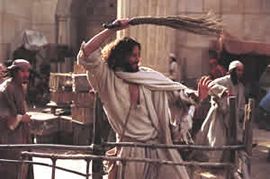
John Dear in Chapter 12 asks, “Didn’t Jesus overturn the tables and chase people out of the temple with a whip?”

Most of the paintings of this incident were done after versions of the Bible were disseminated that translated the word as “whip”.  Like paintings of a white Jesus, sometimes these old images continue through a culture, regardless of what a text says.

However, Dear makes it clear that this incident reminds us that “the nonviolent Jesus was not passive.  He did not sit under a tree and practice his breathing.”  Jesus was very confrontational, and may have seemed angry enough to hit someone or more.  It’s no wonder we may think his actions at the temple prove he wasn’t nonviolent because it was so…action-oriented.  “His nonviolence was active, provocative, public, daring and dangerous.”
Continue reading

Electing Faithfulness: Part 2: Yep, Still Riding the Ron Paul Revolution

[Part 1: Considering Third Roads]
“I’m Still Riding the Ron Paul Revolution”

or
“An endorsement for Congressman Paul as President by a citizen fully aware that he is not running”

(and why Caleb Coy would like for you to write in Ron Paul, though he fully respects your right to choose and wishes to clarify that he is not telling you what to do as prescribed to him by a pulpiteer or denominational edict, but offering what he has to say in a public forum)
(and yes, I know he’s not running, but that’s not the point.  If democracy works the way it says it does, someone who gets more write-ins than votes still wins.  If he does not, this only proves the system doesn’t work in the first place)

Continue reading

_Not Worth Fighting For_ Review: Part 11

The last chapter discussed what Jesus meant by “bringing a sword”.

In Chapter 11, Andy Alexis-Baker looks at the case study of a Roman Soldier: “What About the Centurion?”

The argument has gone that since the centurion showed great faith, and that Jesus commended him, and did not tell him to leave the service, that it was ok for the centurion to be a soldier, and thus it’s ok for Christians to war.

But if you grew up with the heritage of faith that I did, you are very very familiar with how the whole “making arguments from silence” thing works.  I’ve seen whole debates on whether silence is permissive or prohibitive (or either of these exclusively).  Baker says “Jesus’ silence on the centurion’s profession has become a tacit endorsement of Christians becoming involved in state-sponsored killing.”

Continue reading

Today I celebrate Las Casas Day

I am indebted to James Loewen’s Lies My Teacher Told Me in the creation of this post. Please take the time to read it if you are a teacher, interested in history, or are curious about what people have told you about the world and how much of it is true.

I will never celebrate Columbus Day. Well, I never really did celebrate Columbus Day. I mean, what do we do? Not anything really. It’s a wasted holiday that should be done away with immediately, and there wouldn’t be anything to miss if we did.
Continue reading

Electing Faithfulness: Part 1: Considering Third Roads

Considering Third Roads
or
What’s Wrong with These Guys?
or
Egyptians or Amorites?  Who’s it Gonna Be?

You heard a debate the other day.  It was between two guys likely to take the role of single individual holding the most official power in America.  Seems like a big deal.  It is, in a way, but when you look at the big picture, it ends up not being much of one at all.  Still, a pretty big deal.

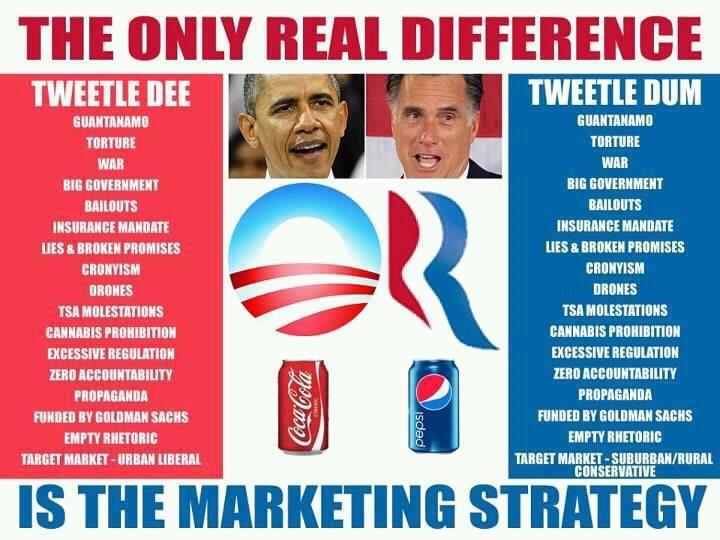
So many of you will likely think of picking choice A or B.  I see why.  I mean, this is how the game seems to work, right?  People give you two choices and you pick one of them.  And to be fair, in all likelihood, it will be one of these two fellas.  That’s how the system tends to work.  I will tell you now that I don’t intend on voting for either of these guys.

One way in which it has been explained is this:

Continue reading

_Not Worth Fighting For_ Review: Part 10

The last chapter dealt with what it meant for “every soul to be subject to governing authorities“.

Chapter 10 Samuel Wells deals with a puzzling statement made by Jesus.  Now we ask, “Didn’t Jesus say he came not to bring peace, but a sword?”

Matt. 10:34-39 is the central text in this chapter.  Jesus did in fact say these words: “I have not come to bring peace, but a sword.”

The irony Wells points out is that nearly every Christian will tell you Jesus didn’t “come to bring the sword”, and yet so many Christians act as if he did, whereas he said he did “come to bring the sword”, and yet his life and the lives of his followers after his ascension show the opposite.  So something’s strange here, right?

Continue reading

Announcing: The Caleb Coy Election Frenzy Series?

Aren’t you tired of those messages telling you about what your Christian duty to vote entails?

I’m going to be honest with you and tell you that I am personally interested in sharing with you how I feel about political issues, why I feel the way I do, and why I am genuinely interested in what I share with you affecting the way you perceive them.  If you are not interested in sharing that kind of thing, this next series of blog posts may not be for you.
Continue reading