Twitter and Little Birdies

“A little birdie told me…”

Heard that colloquialism before?

Nobody knows exactly where this phrase comes from but I heard it through the grapevine that the oldest and most likely source is Ecclesiastes 10:20.

“Do not revile the king even in your thoughts, or curse the rich in your bedroom, because a bird in the sky may carry your words, and a bird on the wing  may report what you say.”

Or it could just be a reference to carrier pigeons.  Perhaps Solomon (or whoever wrote the wisdom he collected) was also thinking of carrier pigeons.  Or parrots.  Solomon acquired a lot of exotic things.  Maybe parrots also.
Continue reading

Gatsby: Now That You’ve Read the Novel…

I had the rare opportunity to teach a novel right before the movie version of the novel is released.  I became totally immersed in the novel for the first time since I was in high school. And then I saw the movie.  If you haven’t done either yet, here’s why you might be interested:

F. Scott Fizgerald wanted to write a great novel about his time, about the 1920s, about an era that could be summarized by the symbol of a champagne bottle exploding into the night emptying itself hollow with intoxication.  You like that?  Well, he didn’t use that, but what he did use was a giant, haunting billboard for a long-forgotten oculist (aka eye doctor).
Continue reading

Modeling “Incident” Poems for Students

As part of a mini-unit on the Harlem Rennaisance, I had students encounter the poem Incident by Countee Cullen, in which the author remembers a seemingly minor incident in his childhood that impacts him for the rest of his life.

As part of our study, we discuss the theme of being deeply impacted by a small incident, and as part of the lesson, I asked students to write their own “incident” poem.

Now, whenever possible teachers should try to model composition for their students for various reasons, among them being the viewing of the process, the example from an adult they know, and the assurance that their teacher is in on the “adventure” with them.

So here’s a little something I came up with, a poem about a time when my family was on vacation in Arizona.  One day I waited in the car to look at the desert while my family went inside a store.  A very small, insignificant event happened, but for some reason I still remember it.

Arizona Day

I sat in the car and waited
Admiring the day
An odd old man approached me
He had something to say
He gave a friendly greeting
And asked about the day
I spoke of all the weather
For I knew not what to say
He spoke also of weather
And of the coming day
And soon enough we finished
With nothing left to say
At once my dad returned
To drive us round all day
I told him of the lonely man
And all that we did say
I said it was nothing much
He said I might have made his day
And when this thought occurred to me
I knew not what to say
Gleanings from Clement of Corinth

The Letter of Clement to the Christians in Corinth is probably the earliest Christian writing we have outside of the Gospel canon.  The letter mainly dealt with a scandal in which shepherds (aka elders, bishops, presbyters) had been tossed out by a younger generation without good reason.  It’s a well-known letter to Christians today, but it gives us a great insight into early Christian history and culture.  Here are some gleanings from the letter:
Continue reading

_Blue Like Jazz_: the Book, the Film, the Thoughts

“I used to not like God because God didn’t resolve. But that was before any of this happened…Jazz is like life because it doesn’t resolve. But what if we’re not alone? What if all these stars are notes on a page of music swirling in the blue like jazz?”

I came across Donald Miller as a group at my church were studying his memoir, and then as my brother introduced me to him.  Donald Miller’s memoir of reflective essays, Blue Like Jazz: Non-Religious Thoughts on Christian Spirituality, is a book that is refreshingly honest, complexly painful, and creatively provocative.  It successfully reaches both Christians and non-Christians as an audience.
Continue reading

_The Fault in Our Stars_ Book Review

“The fault, dear Brutus, is not in our stars
but in ourselves, that we are underlings.”
-Cassius, in Julius Caesar

This was my first cancer book.  The Fault in Our Stars, by John Green, came out a year ago.  Hazel Grace is a 16-year-old cancer patient who comes to terms with her terminal illness in a unique way when she meets fellow cancer patient and amputee Augustus Waters.  This is neither a cancer book or a romance or a comedy.  But it will behave like all of those.  Green’s novel gives us tragicomedy in a way only greats like Shakespeare knew how.
Continue reading

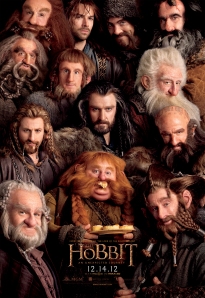
Part the only of my review of _Hobbit: Unexpected Journey_

“All the good stories deserve embellishment,” says Gandalf.  In Jackson’s case, embellishment means lots of CGI and plot tangents not in the core source material, but a great story is still told.  If you go see The Hobbit: A Fun Expected Journey, I cannot promise that you will come back fully happy.  But if you do, you will not be the same.
HAUJ_Bus_Dwarves_DOM

Continue reading

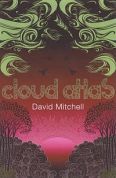
_Cloud Atlas_ Review (the novel)

I had not heard of Cloud Atlas until the trailer for the film.  I immediately looked up the book and was interested.  When a friend told me she had begun reading it, I quickly followed along.

David Mitchell’s Cloud Atlas is what some describe as a Russian doll of a novel, epic in scope and universal in theme.  The story is broken into six different stories that weave together in connection.  In terms of history, it’s a tale of “There and Back Again,” with fictional characters telling their story in layers unawares, from historical journal to epistolary romance to political thriller to farcical biopic pitch to digital recording to oral history.
200px-Cloud_atlas

Continue reading