Why It Ain’t a Crime to Say “Ain’t”

” ‘Ain’t’ ain’t in the dictionary.”

Ever hear that one?  The colloquial phrase “ain’t” is typically a contracted variation of “am/is/are/was/were not”.

We commonly hear that “ain’t” is improper, is bad grammar, is a sign of ignorance.  Is this true?  And what does the use of “ain’t” say about us?

Conventionally, many people suppose that it is.  After all, in none of the preceding forms of “to be” that ends in the word combination “ain”.  Yet somehow we have ain’t.  This leaves us with the question, “how did this develop?”
Continue reading

Modeling “Incident” Poems for Students

As part of a mini-unit on the Harlem Rennaisance, I had students encounter the poem Incident by Countee Cullen, in which the author remembers a seemingly minor incident in his childhood that impacts him for the rest of his life.

As part of our study, we discuss the theme of being deeply impacted by a small incident, and as part of the lesson, I asked students to write their own “incident” poem.

Now, whenever possible teachers should try to model composition for their students for various reasons, among them being the viewing of the process, the example from an adult they know, and the assurance that their teacher is in on the “adventure” with them.

So here’s a little something I came up with, a poem about a time when my family was on vacation in Arizona.  One day I waited in the car to look at the desert while my family went inside a store.  A very small, insignificant event happened, but for some reason I still remember it.

Arizona Day

I sat in the car and waited
Admiring the day
An odd old man approached me
He had something to say
He gave a friendly greeting
And asked about the day
I spoke of all the weather
For I knew not what to say
He spoke also of weather
And of the coming day
And soon enough we finished
With nothing left to say
At once my dad returned
To drive us round all day
I told him of the lonely man
And all that we did say
I said it was nothing much
He said I might have made his day
And when this thought occurred to me
I knew not what to say
Why There Ain’t Nothing Wrong With Double Negatives

“I didn’t do nothing,” is a double negative.  The words didn’t and nothing, both being negative, create a sentence in which there are two negatives, when it is otherwise assumed that the speaker meant to enforce a single negation: Nothing was done.

Is this an error?  Is this bad grammar?
Continue reading

Peanut Shells and Bible College Lectureship Discussions

The other night I had the privilege at eating at Texas Steakhouse, which is like Logan’s Roadhouse, which both have something in common with Five Guys and a Burger, which is my favorite of the three.  That information isn’t important.  Neither is it important that among the few lifespan-decreasing fast food chain restaurants I actually enjoy is Five Guys and a Burger.  On two levels, the burgers and peanut-oil fries are to die for.  I’m here to talk about the peanuts.
Continue reading

Jesus Loves You & Pure Religion Too: A Response to Jeff Bethke

Around this time year ago I was one of many people who grew interested in a thoughtful and poignant video poem posted by Jeff Bethke, and responded to the discussion in like fashion with a video poem.

Here is Bethke’s poem, “Why I Hate Religion, but Love Jesus”

Here is the video poem I posted in response, “Jesus Loves You (and Pure Religion Too)”

Continue reading

If Hitler was a Christian, I’m the Queen of England

Occasionally you’ll bump into someone who is convinced that the Holocaust was a result of Christianity.

Now, I could dismiss this and laugh it off (no pearls before the swine). But then you would never know if it was true, and if you were searching for reasons to abandon your Christian belief then my reaction would seem cowardly. So let us discuss the matter.

Was Adolf Hitler a Christian? And, if so, is Christianity to blame for the Holocaust?
Continue reading

A Farewell to Gun Memes: “Swords–>Plows” Means Something

Stop posting stupid memes.  Especially ones about guns.

I’ve previously established the need for Christians to actually make alive the kind of kingdom that beats swords into ploughshares.  This is what Isaiah prophesied (2:3-4),  and which Micah prophesied (4:3).

Think about what this means: Taking swords and beating them into scythes, taking spears and beating them into pruning hooks.
Continue reading

10 (New Year’s) Resolutions for Responding to Violent Tragedy

After a tragedy, sometimes people ask “where was God in this?”  Sometimes I want to ask “where is God in your response?” and, more importantly, “what kind of God is in your response?”

Can we agree to a verbal armistice? Let’s pretend that bad memes and misuse of statistics are like using nerve gas and Agent Orange.  Be the bigger one and stop using it, demonstrating that not-using-it-ness to those who disagree with you.  Come on, I know you can do it.
Continue reading

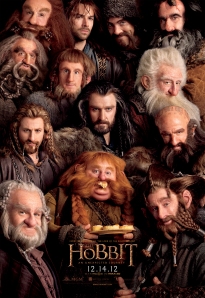
Part the only of my review of _Hobbit: Unexpected Journey_

“All the good stories deserve embellishment,” says Gandalf.  In Jackson’s case, embellishment means lots of CGI and plot tangents not in the core source material, but a great story is still told.  If you go see The Hobbit: A Fun Expected Journey, I cannot promise that you will come back fully happy.  But if you do, you will not be the same.
HAUJ_Bus_Dwarves_DOM

Continue reading