_Not Worth Fighting For_ Review: Part 6

“They triumphed over him
by the blood of the Lamb
and by the word of their testimony;
they did not love their lives so much
as to shrink from death.” -Revelation 12:11

“So if the Son sets you free, you will be free indeed.” -John 8:36

Happy International Peace Day, everyone.  A day we should all celebrate.  In part 5 of the review we looked at the difficult question of how to be or work with policing in a peace community.

Chapter 6 is a message easier for me to accept up front, and is a conclusion I have already drawn.  Justin Bronson Barringer asks, “What About Those Men and Women Who Gave Up their Lives so You and I Could Be Free?”  A question which he feels “seems an attempt to shame the one to whom it is directed as one who dishonors soldiers.”  As if to say that the people who don’t love soldiers are the ones who want them to come home, not the ones who want to send them out to shoot and get shot on the sender’s behalf.

Continue reading
Sweet and Wild: Dave Matthews _Away from the World_ Review

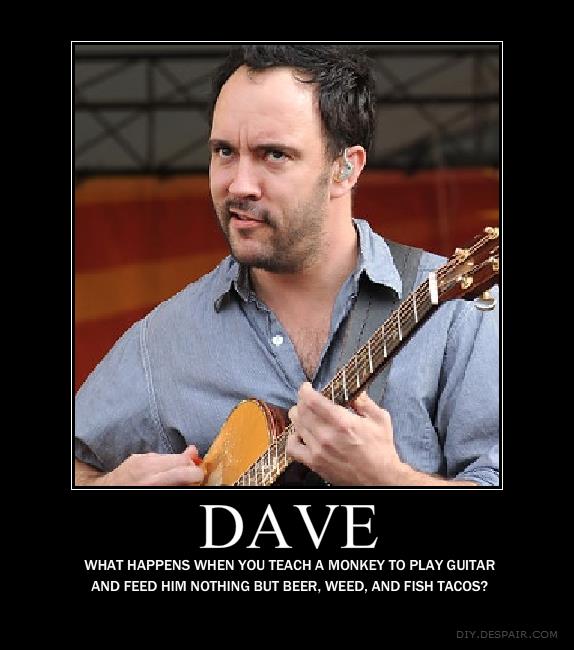
Dave is weird, but I love him.  DMB was a fresh taste of music for me that opened me up to the music of the 90s.  I don’t understand why his biggest fan base is frat boys in ball caps.  Shouldn’t y’all be listening to All American Rejects or something?  I’ll also never understand why I like him.  That boy is one filthy hedonist.  But he’s also an introspective philanthropist.  DMB’s music is a world rock mix of genres that knows how to have fun.

Continue reading

_Not Worth Fighting For_ Review: Part 5

The last chapter dealt with Hitler.

Chapter 5 deals with a question we might often overlook: “Must Christian Pacifists Reject Police Force?”

One reason it’s overlooked is that, until 200 years ago, military and police weren’t really seen as separate entities in most of the world.  They are both government agents authorized to use force, and even violence, if necessary.  The distinction remains important because, unlike war, police can truly “be accountable to legislative regulation” that “at least stands some chance of punishing only the guilty while protecting the innocent.”

In this chapter Schlabach first introduces the concept of nonviolent policing, which some people may regard as a joke.  How are police effective if they don’t use force?  But the same question could be asked of soldiering, perhaps.
Continue reading

The Bros. Guard on the Bros. Avett: _Carpenter_ Review

Caleb: “I and hate and it.”  That was the 5-word review given by my friend Rob Case of the last Avetts album, after they supposedly sold out for the first time.  Now they’re in a GAP commercial.  Just wanted to let you know, I liked them before they were popular.  But I’m proud to say I ain’t no ironic bandwagon hipster: I still like them now.  And I don’t think they sold out.  Look, guys’ gotta eat.  By the way, if you don’t know the Avetts and are reading this for some reason, they are what rock and roll would sound like if it was invented right after the War of Northern Aggression.
Continue reading

_Not Worth Fighting For_ Review: Part 3

Chapter 2 discussed the hope of the resurrection and the life of Jesus as the core of Christian nonviolence.  We dealt with the question of helping a neighbor who is being attacked and how a Christian committed to nonviolence may handle such a situation and why.

Chapter 3 leaps right into a very very difficult question: “What would you do if someone were attacking a loved one?

I have a wife and a child.  I love them and want to protect them from evil.  Because of this, many things in this world are unsettling to me even more than they would be were I single and childless.  Whatever I believe and do, I must live like Christ.
Continue reading

_Not Worth Fighting For_ Review: Part 2

“Pacifism is not a monolithic stance or approach to war, violence, or politics.  There are varieties of it.”

The first chapter of the book distinguished between pacifism and passivity.

In chapter 2 D. Stephen Long deals with the difficult question “What About Protecting Third Party Innocents?  Can we just let our neighbors die?

Long doesn’t pretend all this is easy.  He’s a reluctant pacifist who came from a military family.  He doesn’t let us choose pacifism for some bogus reason.  He rejects that liberal pacifism where we just say we hate war but perpetuate the conditions that make war “necessary”.  He rejects the notion that war is bad because all soldiers are bloodthirsty savages.  Many soldiers are and have been decent, loving, exceptional, faithful people who seem to be incapable of harboring hate, and what we call good soldiering requires “self sacrifice, disciplined community, and moral attentiveness.”  He rejects the notion that pacifists are better because they don’t like war and everyone else does.  Practically nobody loves war (except immature American boys who play Call of Duty all day and think war would be fun).  Even the most battle-hardened want to avoid it, with few exceptions.  So we can’t reject violence for cheap reasons.
Continue reading

_Not Worth Fighting For_ Review: Part 1

When you think of people who believe in nonviolence, what image comes to mind?  Is it someone you find distaste in?  Is something about them other than their commitment making you dislike them?  Now picture someone who is like you or someone you admire in every way.  Then imagine them truly believing in nonviolence.  Would you call them a sissy?  Coward?

In my last post I introduced the chapter-by-chapter review of A Faith Not Worth Fighting For, a collection of essays on Christian nonviolence, specifically questions often asked about it by skeptics, or just curious seekers.

The first chapter opens with a common misconception worded in this question:  “Isn’t Pacifism Passive?

We come to see that this argument against peacemaking has not roots in logic or theology, but comes from what I’ve found is a mixture of semantic misunderstanding and aesthetic distaste.  In her essay C. Rosalee Velloso Ewell addresses this question very well.

[note: for the sake of clarification when I speak of pacifism I will speak of it in broad terms, meaning a commitment to nonviolence, which we will see is based on the word for “passion”.  Whether that means a decision never to use violence ever, we shall see as we read along.]

As with the rest of the book, Ewell leads the discussion based on five assumptions for Christians:
1) Jesus and his story are real
2) We are to be witnesses of Jesus
3) We “see thru a glass dimly” (1 Cor. 13:12), but “we do see Jesus” (Heb. 2:9)
4) Faith is a journey in which we question ourselves and shine our light for others
5) It all goes back to the life (and death, and  re-life) of Jesus
Continue reading

Announcing: A by-chapter review of _A Faith Not Worth Fighting For_

I will take away the chariots from Ephraim
and the warhorses from Jerusalem,
and the battle bow will be broken.
He will command peace to the nations.

-Zecheriah 9:9-10

I’ve been looking forward to reading a certain book for a while, now that I’ve had some friends recommend it to me.  The book is called A Faith Not Worth Fighting For, a collection of essays about Christian nonviolence.  It is a book that I already know will challenge me, will set the voice of scripture up against some things people sometimes tell me who also read that scripture a lot.

I’d like to thank Carl Jenkins for really getting me interested in the reading, and for giving me bits and pieces of his reading along the way.  He did a book review.  I’m doing a full chapter-by-chapter throughout the next month or so.

Continue reading