People have been tossing around the word “radical” a lot lately.
Suppose a boy grows up in a home with a terrible, abusive father. Every day the father beats the boy and hurls insults him immensely. The boy cannot stand it, but he doesn’t know what to do about it. In the world he has grown up in, loathing, fear, and pain are all he knows.
Then one day the boy meets a friend who is kind. Eventually the boy opens up to the friend about his father. His friend is incredibly shocked, and says to him, “if I were you, I would kill him.”
The boy, after opening up for the first time about his experience, discovering a different kind of relationship, and hearing someone else express a desire he didn’t know he had, goes home one day and kills his father.
What radicalized the boy?
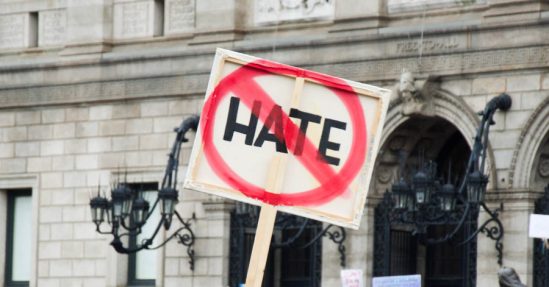
A knee-jerk answer will reveal a lot about a person’s understanding of what radicalization is.
Now, of course this is a simple illustration told in a vacuum. What other factors are there? Socially, culturally, etc. What is school like? Other family members? Does the boy have other friends at all? Internet access? What does he read? Who else has treated him kind or poorly? But for the sake of illustration, consider two possible answers.
One: The one who insinuated the boy could kill his father radicalized him.
Two: The father who oppressed him radicalized him.
Upon first inspection, the one who planted the idea in his head to take his father’s life is the sole person responsible for making him so radical. But that theory doesn’t hold much water. If that were so, the same friend could tell anyone to kill a parent and they would do so. Something pushed the boy.
If we look deeper, we can understand that while the friend catalyzed the boy’s violence, he was already radicalized by his father. In fact, in many homes, a child raised in such a way will replicate his father’s violence upon his own children. In other homes, the boy grows up to swear to himself that he will not be like his father. A father who is radically abusive.
Of course, the wider truth is that anyone who contributed to his deed is indeed a contributor. Anyone who pushed him in that direction assisted in the radicalization. But the majority of the work was put in by the father. The boy could not have built up the trauma and internalized hatred alone.
I bring this up in the context of our times. A person commits a violent act, and everyone is quick to assume their political tribe. We come to find out all too often that it’s complicated. The violent offenders often seem to represent the weary, nihilistic gulf in America itself.
When people are radicalized, it’s never really just one thing. It is many.
There has got to be another way.
 CALEB COY